
For decades, NIDA has leveraged the U.S. government’s Small Business Innovation Research (SBIR) program to bridge the gap between addiction science breakthroughs and real-world implementation. By supporting high-risk, high-impact innovations, we have helped advance solutions aimed at addressing substance use disorders, drug diversion, and emerging public health threats through a wide range of technologies including wearable overdose monitoring devices, wastewater drug detection, and devices used in hospitals to treat neonatal opioid withdrawal.
NIDA has also backed companies built from the ground up around advanced data science and artificial intelligence. Well before the recent surge of interest in chatbots and large language models, and even before AI became a ubiquitous buzzword, our Institute was funding AI-native startups that embedded machine learning, predictive analytics, and automated pattern detection at the core of their platforms. Several ventures receiving NIDA support were designed from inception to harness large, complex datasets—whether from hospital medication systems, digital marketplaces, or scientific literature—to reveal risks and provide insights that human review alone could not reliably detect.
NIDA’s Office of Translational Initiatives and Program Innovations (OTIPI), led by Dr. Elena Koustova, coordinates funding for promising startups and provides hands-on technical guidance as they translate promising early-stage research to scalable commercial products. In some cases, NIDA is the funder of first and last resort, as the products would not have come to fruition without our help.
SCITE
A prime example of NIDA’s vision in funding AI-native startups is a company called Scite, founded by a young Brooklyn entrepreneur named Josh Nicholson. Noting growing concerns about research reliability, reproducibility, and the limitations of existing metrics for assessing the impact of publications, Nicholson perceived a need for a tool that could make scientific literature more reliable and meaningful to researchers by contextualizing scientific citations instead of simply counting how often they had been cited by others. In 2018, Nicholson and his team were selected for NIDA’s “$100,000 Start an SUD Startup” Challenge, showing early promise with their “R-factor” for measuring scientific veracity. In October 2019, NIDA awarded Nicholson’s startup a Fast-Track SBIR grant, which included Phase I and Phase II funding to advance the company’s machine-learning classifier and citation-extraction technology that automatically identifies whether research citations support, contradict, or simply mention prior work.
This information is valuable, as heavily cited papers aren’t necessarily influential in a positive way. One of Nicholson’s inspirations for developing his system of “smart citations” is the now-infamous 1980 letter in the New England Journal of Medicine, “Addiction Rare in Patients Treated with Narcotics.” This single paragraph about hospitalized patients prescribed opioids under supervision greatly contributed to relaxation of norms around opioid prescribing when it was widely taken out of context as applying to pain patients more generally. It is considered to have played a major role in the first wave of the opioid crisis.
In early 2020, Scite made headlines in Nature for helping researchers sift through the mountains of sometimes conflicting scientific findings being published around COVID-19. Thanks to NIDA’s backing, Nicholson and his team have significantly expanded Scite’s dataset, improved classification accuracy, and demonstrated the practical value of smart citations in real research contexts, which has contributed to subsequent partnerships with major publishers and recognition in the scholarly community. As of now, Scite has access to 1.5 billion research articles from more than 200 million sources, and those numbers continue to grow. ChatGPT users can now connect to the Scite app and receive Scite-verified sources with answers to their prompts.
S-3 Research
Another example of NIDA’s backing of AI-native ventures is S-3 Research, a San Diego-based startup focused on detection of illicit drug sales across digital platforms, including social media, the dark web, and online pharmacies. NIDA played a catalytic role in supporting founder Tim K. Mackey’s transition from college professor to AI entrepreneur, translating his previous academic research on online drug diversion into scalable machine learning tools. His products now generate actionable public health intelligence for regulators and law enforcement, identifying evolving tactics used by illegal opioid sellers who increasingly operate online.
It began when Mackey’s team won NIDA’s “$100,000 Start an SUD Startup” Challenge in 2017, enabling them to formalize their concept of leveraging social media surveillance and unsupervised machine learning to detect illegal online opioid sales. With NIDA’s guidance, the team refined the innovation from both scientific and commercial perspectives, which helped them successfully secure SBIR Fast-Track funding, enabling further research and development in both Phase I and Phase II, thus moving the product closer to commercialization. With this support, S-3’s technology advanced from a research concept into a scalable surveillance platform capable of tracking patterns of diversion and delivering actionable intelligence across languages and global markets.
In 2023, NIDA awarded S-3 Research a contract for the development of a digital platform identifying communities with limited access to quality addiction treatment and providing data-driven solutions to reduce or eliminate disparities. Using big data, machine learning, statistical and geospatial analysis, and data visualization, Mackey and his colleagues built SUD-t Map, a national comprehensive database of SUD treatment facilities that integrated demographic, economic, social, and other health disparity-related data with other available local community data, thereby helping address the opioid epidemic by expanding access to care and protecting vulnerable populations.
Invistics
NIDA’s SBIR program also provided crucial early support for a company called Invistics. Beginning with a Phase I SBIR award in 2017 and continuing with a larger Phase II award, NIDA funded founder Tom Knight’s research to consolidate disparate hospital data and apply advanced analytics to identify patterns of medication theft and diversion that traditional methods often miss. These awards subsidized the testing and refinement of algorithms that reconcile drug movements across the supply chain from purchase through administration.
Knight and his colleagues designed a platform capable of identifying patterns consistent with illicit diversion by healthcare workers by integrating data from Automated Dispensing Cabinets (ADCs), Electronic Health Records (EHRs), and multiple other IT sources, and utilizing predictive analytics and supervised machine learning to reconcile medication transactions. Invistics demonstrated the superiority of its model over existing methods in detecting drug diversion and enabled effective investigation and reporting of suspicious activity. A five-year NIDA-funded study showed that the system detected drug diversion cases much faster and more efficiently than traditional solutions based on manual reporting, with up to 96% accuracy.
NIDA’s support for Knight’s research not only accelerated the technical maturation of his software but also contributed to broader validation of the technology and likely increased its visibility and credibility in healthcare markets. This ultimately helped Invistics attract acquisition interest, culminating in its 2023 purchase by Wolters Kluwer Health, whose AI-enabled drug diversion solution, now renamed Sentri7, enhances clinical surveillance and compliance offerings to help health systems improve their monitoring of controlled substances and reduce risk to their patients.
Thanks to NIDA’s early, forward-looking investments, AI’s role in addressing substance use and public health challenges is not theoretical or aspirational—it is established, operational, and now delivering measurable results. AI systems are improving the integrity of research evidence, identifying illicit opioid sales online, and detecting drug diversion faster than existing methods, at a time when much of the world is still playing catch-up and learning about these transformative technologies.
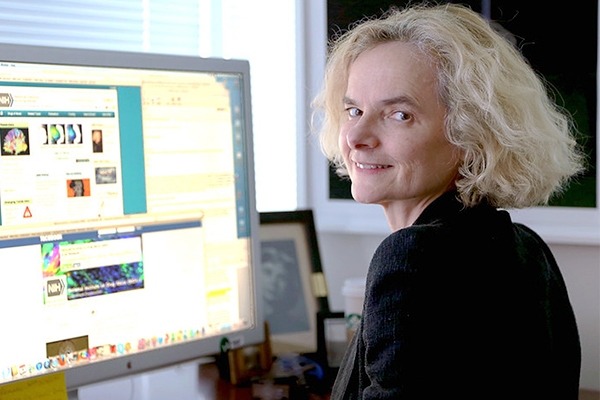
Dr. Nora Volkow, Director
Here I highlight important work being done at NIDA and other news related to the science of drug use and addiction.