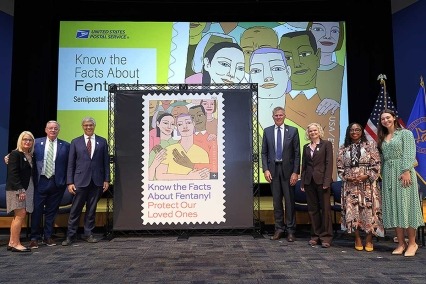
The stamp is small, fitting on the corner of an envelope, but the story it tells is huge.
For over a decade, illicit fentanyl has driven an addiction and overdose crisis that has affected every community in the United States and claimed far too many lives. In 2025, synthetic opioids, mainly fentanyl, were involved in 85 percent of opioid overdose deaths. The numbers are finally turning around—opioid-involved overdose deaths in 2025 fell by 43 percent compared with 2023, and data thus far indicate that the decline is continuing. But this is fragile progress: Tens of thousands of people still die each year from fentanyl-related overdose.
There is reason for hope, however. Earlier this month, I had the honor of speaking at a ceremony dedicating a new Know the Facts About Fentanyl semipostal stamp, the result of a partnership between NIDA and the U.S. Postal Service (USPS). A portion of net proceeds from its sales will support NIDA research, helping advance the science needed to prevent substance use and addiction, reverse overdoses, treat opioid and other substance use disorders, and sustain recovery.
The science is advancing steadily along all these fronts. And one important finding from our decades of investment in solving the problem of drug addiction in America is beautifully captured in the image that adorns the new stamp: People matter to people. The person at the center of this colorful stamp is not alone. They are surrounded by people offering care, comfort, and connection. And importantly, they are receiving that support without shame. That matters because addiction thrives in isolation. The opposite is true for prevention, treatment, and recovery.
We know from decades of prevention science that families, friends, peers, schools, healthcare providers, and communities can all be powerful sources of protection and resilience. Strong, supportive relationships can help teens navigate periods of vulnerability and reduce risks associated with substance use during a period when drug temptations and peer pressure can be overwhelming. And for people of all ages who are struggling with addiction, a loved one may be the person who carries naloxone, recognizes when an overdose is occurring, helps connect them with treatment, or simply continues to show up.
Recovery is sustained through connection. Families, friends, and peers in recovery all can send a simple but powerful message: You matter, and we are here with you. NIDA research is increasingly examining how we can strengthen social support, such as through research that engages families and on community-based interventions that can help people remain connected to treatment during transitions in their lives, when they may be most vulnerable.
Fentanyl is an extraordinarily potent drug, and it is often found mixed with or in place of other drugs. People may take it without knowing, with heartbreaking results. Ed Ternan, who lost his 22-year-old son Charlie to a fake Percocet pill reiterated the powerful theme of connection at the stamp unveiling. Noting the unusual mix of people in the audience — NIH scientists, stamp collectors, and many others like him and his wife Mary who had lost loved ones to fentanyl — he remarked, “What we need is an all-of-society approach to the drug overdose crisis, and today is the most tangible example of that that we’ve seen yet.”
The Ternans are cofounders of Song For Charlie, a nonprofit organization dedicated to educating families and youth about the dangers of illicit fentanyl.
The Know the Facts About Fentanyl stamp also embodies another principle that has long been a focus of our work at NIDA: compassion without stigma. Stigma can keep people from disclosing their substance use to others and from seeking treatment, carrying naloxone, and asking for help. People experiencing addiction deserve the same dignity, care, and quality treatment as anyone facing another health challenge. I deeply appreciate that Antonio Alcalá and Whitney Sherman, who designed the stamp, chose to make connection — not fentanyl itself — the central image.
It is fitting to convey these messages of connection and compassion through a postage stamp. Stamps travel. They connect one person to another. This stamp will travel through homes, workplaces, and communities across the country, carrying a reminder that community matters, treatment works, recovery is possible, and no one has to confront addiction by themselves.
For more information about the Know the Facts About Fentanyl stamp, read the USPS Press Release, or watch a recording of the event.

Dr. Nora Volkow, Director
Here I highlight important work being done at NIDA and other news related to the science of drug use and addiction.