



Data repository for drug addiction and health research
Webinars:
- Data Sharing for Real-World and Non-Primary Data Sources
Register
Date: February 11, 2026
Time: 12:00 PM EST
Past Webinars
- Exploring NAHDAP: Essential Tools for Finding and Using NAHDAP’s Data and other Resources – December 2024 (YouTube)
- Sharing Data with the National Addiction & HIV Data Archive Program (NAHDAP) – May 2025 (YouTube)
Additional webinars are available.
What is NAHDAP?
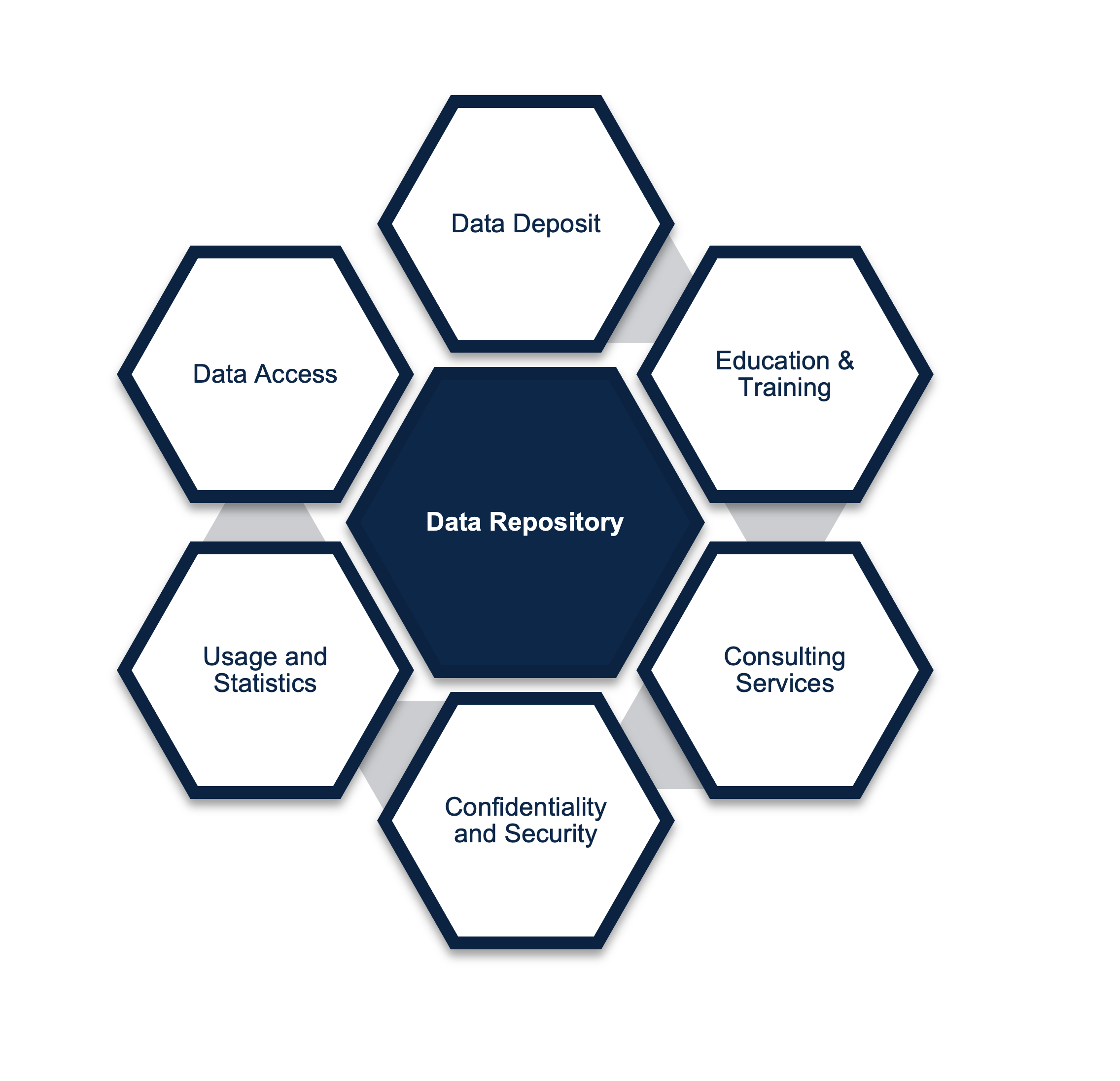
• Education & Training
• Consulting Service
• Confidentiality and Security
• Usage and Statistics
• Data Access
The National Addiction & Health Data Archive Program (NAHDAP) is a NIDA-funded data archive program that acquires, preserves, and disseminates data relevant to drug addiction and health research. By preserving and making available an easily accessible library of electronic data on drug addiction and health-related topics in the United States, NAHDAP offers scholars the opportunity to conduct analysis of existing data on major issues of social and behavioral sciences and public policy. NAHDAP also offers consulting services for researchers, including but not limited to, budgeting data deposition cost for the data management and sharing plan, guiding data preparation, and providing letters of support for grant applications.
Since its launch in 2009, NAHDAP has made over 500 studies available to the research community, including studies such as Monitoring the Future Study (MTF), Research on Pathways to Desistance, and the Population Assessment of Tobacco and Health (PATH) Study.
What type of data are accepted for data deposition?
NAHDAP accepts social and behavioral research data in addiction, or health and addiction and related outcomes. A wide range accepted can be accepted (e.g., quantitative, qualitative, and imaging). Visit the NAHDAP website for a full list of high-priority data.
- NIDA-funded studies
- Longitudinal data with at least two waves using consistent measures
- Studies that include common/standardized measures and/or overlap in methods used or measures included with NAHDAP studies
Why choose NAHDAP?
NAHDAP follows best practices for data deposition and access that ensures data confidentiality and privacy. NAHDAP is hosted by the Inter-university Consortium for Political and Social Research (ICPSR), the largest social science data archive in the world and part of the University of Michigan’s Institute for Social Research. Data depositors can also track usage statistics of their study files. By leveraging the ICPSR infrastructure, NAHDAP offers the following:
- Standardized using the Data Documentation initiative (DDI) metadata standard
- Maintains metadata for data packages
- Assigns and maintains Digital Object Identifier (DOI) and data citation
- Curated and quality assured
- Expert curators at ICPSR to review, organize, and document data
- Three levels of curation based on complexity of the data
- Data confidentiality and study participants privacy protected
- Disclosure review guidelines to ensure data confidentiality is maintained
- Data stewardship policy committee, data privacy and security officer, and a disclosure review board to set policy and practice
How can data be accessed?
NAHDAP datasets are available for use in SPSS, SAS, Stata, R, and ASCII formats. Data are available as both public-use and restricted-use files.
| Public-Use | Restricted-Use |
|---|---|
|
|
Example Datasets in NAHDAP


How can I get more training and support on using datasets that NAHDAP makes available?
NAHDAP hosts several education and training activities throughout the year. Examples include:
- Workshops in ICPSR’s Summer Program
- Webinars and presentations on NAHDAP’s services and data collections
- Data-driven learning guides
- Links to external learning resources
Access past recordings and workshop syllabus
Questions?
- For general questions about NAHDAP, email icpsr-help@umich.edu.
- For questions about the NIH Data Sharing Policy, see NIH Scientific Data Sharing website.
- For questions about the NIDA Data Sharing Policy, see NIDA Guidance on NIH Data Management & Sharing Policy
- For other NIDA-supported data sharing, see NIDA Research, Data, and Measures Resources.
- For other options to share data at ICPSR, see Share NIH data at ICPSR.